A Guide to Driving Through Flood Water
Jessica Bird | Saturday 13th December 2025 8:00am
As the seasons change and the weather turns, driving through torrential rain, snow, and flooding unfortunately becomes the new normal – especially the further north (or east) you go.
Luckily, the UK’s climate tends not to give us extreme snow and ice, but wetter weather and flooding are becoming more common every year.
So, whether you’d like to or not, driving through water is something that you’re likely to have to learn to do sooner or later. Here’s everything you need to know for driving through floodwater.
First: consider not driving through floodwater
The first and most emphatic piece of advice here is that you should really consider not driving through flood water wherever possible. This is especially the case if you don’t know how deep the flood water is, because dropping unexpectedly low – into a pothole, for example – can cause your car to stall, and leave you stranded in a potentially dangerous situation.
If you’re driving a normal passenger car like a hatchback instead of a car designed for off-road use, you should ideally never venture into standing water on the road.
The risk of flooded exhausts
You may have noticed some off-road cars have an exhaust that exhausts above the cab of the car – this is because of the way engines work. They need to be able to bring air into the engine and to be able to exhaust fumes away from the engine after combustion. If either of these elements are blocked, then the process of internal combustion won’t be possible - and the engine will stall.
In other words, if the intake gets filled with water or the exhaust gets clogged, the car will tend to stall, and, in the case of water getting sucked into the engine, can actually cause really extensive damage that might require the engine to be entirely replaced.
In the wrong places, this can block roads entirely and require recovery vehicles to come and retrieve your car (which is, of course, even more difficult now that the road is blocked).
Protect your vehicle's electrical systems
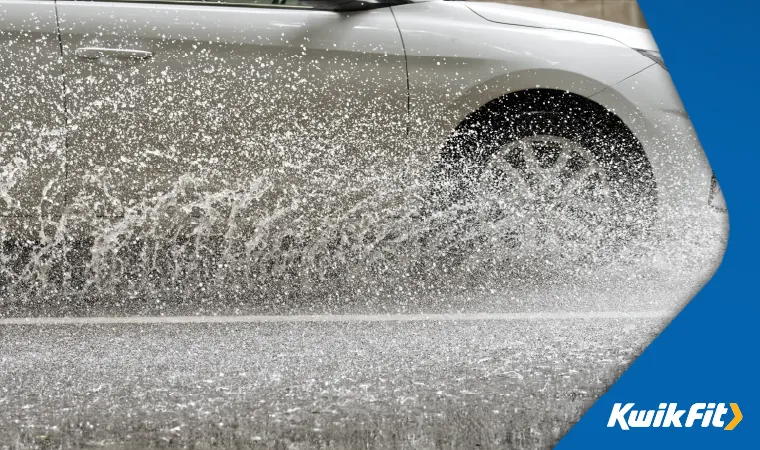
If that wasn’t enough, driving through standing or flowing water can also cause real problems for your vehicle’s electrical systems. Most electrical systems are weather-sealed, but the sealing methods aren’t usually rated for submersion; they’re instead intended to cope with rain and road spray.
You should always be extremely careful when driving through water that’s around four inches deep, and try to avoid driving through water that’s more than around six inches deep.
Avoid driving through moving water at all costs
Even if the level of the flood water looks to be below the level of your exhaust, a great deal of danger can come from the fact that water can flow quickly.
- If there’s an inch of water flowing across the road, it’s not likely to pose a real danger if you drive carefully (more on that in a moment)
- But driving through, say, 10 inches of flowing water means your car has withstand a lot of lateral force to stay going straight.
Not only can flowing floodwater cause parts of the road to have erode away, creating holes and dips that you could get stuck in, but it can also flow with enough force to wash your car away, too.
How to drive safely through floodwater
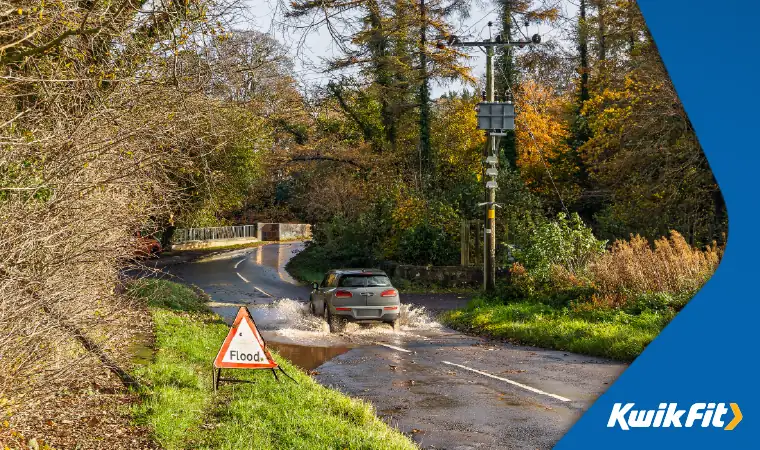
If you’ve established that you can’t go back on the road you came from and you’re forced to drive through floodwater, here are some ways to do so as safely as possible.
1. Drive slowly (but steadily)
The best course of action depends on whether you’re driving across flowing water (such as at a ford) or driving through a waterlogged road.
The best thing to do in either way is to assess a route and go for it in a dedicated way – but slowly. But this “single motion” approach should only be taken in the case of trying to cross a ford. There needs to be a balance here between driving with enough momentum to avoid getting stuck in potentially soft parts of the surface while not driving so fast as to cause more danger or get stuck in a tyre spin in muddy ground.
- Driving slowly gives you ample time to react to changes in conditions, but also makes it less likely for your car to be pushed aside by flowing water, because it takes a lot more force to move a slow-moving car sideways than it does to move a fast-moving car.
- Use your own judgement, but aim to stay at a speed less than 10 mph as you go through the water. This applies to both crossing the path of water as well as driving through a waterlogged street, but you should drive even slower in a waterlogged street because fast movements will cause wakes to form – which can then splash up onto pedestrians or into the intake manifolds of other vehicles.
2. Stay conscious of what’s happening ahead
This is especially important when driving in adverse conditions, because the conditions make hazards ahead more likely to happen.
Try to look ahead as much as possible and assess whether you may need to change your plan or direction.
3. Stay in your car wherever possible
Almost all floodwater should be treated as contaminated because it’s usually the result of rainfall having overwhelmed a town’s sewage system or river. In (and after) particularly heavy rain, sewage may backflow onto the streets in a flood, and therefore water can contain a lot of bacteria that you certainly don’t want to be swimming with.
- Staying in your car therefore reduces the chance of contamination, but also makes any impact less dangerous. If, for example, something (like another car) gets swept up and hits your vehicle, it’s less likely to result in really serious injury to you than if you were to get hit as a pedestrian.
What’s more, a lot of floodwater doesn’t necessarily look like it’s flowing fast but can be extremely difficult to swim through because of really strong undercurrents – this applies even to very good swimmers.
4. Test your brakes as soon as possible
As soon as it’s safe to do so after having got out of the water, you should test your brakes. Water splashed onto the components can render them less effective, so it’s useful to lightly press the brakes so that, firstly, surface water can get squeezed off and, secondly, so that you can see if your brakes have stopped working as effectively - before you’re back on a motorway going at speed.
Make sure you're prepared for winter driving
While adverse weather can happen unexpectedly, it’s wise to assume that it’s going to be rainy, wet, and snowy during the winter months, so it can really help to keep you safe by investing in a set of high-quality winter tyres. Among other benefits, these usually feature much deeper tyre tread to better cope with wet weather.
If you have any concerns with your car following driving through water, then we recommend reaching out to the experts. And if you need any help with car repairs, servicing, and maintenance, get in touch with your local Kwik Fit centre.


Any facts, figures and prices shown in our blog articles are correct at time of publication.
Featured Articles
Is it Illegal to Drive With One Headlight?
Saturday 19th July 2025

Wondering if it’s illegal to drive with one headlight? Learn about the safety risks and penalties of illegal blown bulbs and why you should fix them promptly.
Air Con in EVs & Hybrids: Experts Answer Your Questions
Monday 30th June 2025

Does air con drain EV batteries? Can you use the air con while charging an electric car? Find out the answers to these questions & more from Kwik Fit’s experts.
Why Is Your Car Making a Noise? Fixes & Tips
Friday 13th June 2025

When your car starts making unexpected noises, it can certainly be quite disconcerting; it may be nothing to worry about, but here’s what you need to know.