Are Bright Headlights Legal?
Jessica Bird | Sunday 7th December 2025 8:19am
Four out of five drivers are worried about being dazzled by headlights as the evenings get darker. Are you among them?
Recent research from the RAC and findings by TRL (Transport Research Laboratory) have shed light on the “dazzling headlight problem” with greater intensity than ever before, placing pressure on the UK Government to review its headlight standards.
In this blog, we’ll explain the latest LED headlight laws and studies, exploring the growing concern among drivers about the perceived dangers from headlights. If you’ve ever felt unsafe behind the wheel as a result of too-bright full beams coming from the other direction, read on.
Why are some car headlights so bright?
Headlight glare doesn’t come from one single cause – it’s usually a mix of factors.
- Firstly, bulb type. Modern cars increasingly use LED or bi-xenon bulbs, which produce a whiter, more intense light.
- Beam alignment also plays a major role. Even a slightly misaligned headlight can shine directly into another driver’s line of sight, making it seem far brighter than it should.
- The fact that more and more drivers have SUVs is another contributing factor. Because SUVs sit higher on the road, their headlights are positioned above those of conventional hatchbacks or saloons, increasing the chance of dazzling oncoming drivers. On this, the RAC study revealed that, unsurprisingly, hatchback, estate, and saloon drivers found headlights too bright far more than 4X4 drivers.
- Lastly, cheaper, lower-quality aftermarket bulbs can also add to the problem, producing harsh or poorly focused light.
Combine all of the above with individual differences in vision and perception, and it’s easy to see why some headlights appear excessively bright.
The risks of overly bright headlights
When driving in the dark, being exposed to another car’s bright beam can be a distressing experience. The light may be so bright that it is practically blinding, leaving you in a potentially dangerous situation while you’re driving.
- Glare from bright headlights can temporarily impair your vision and reduce your ability to see critical hazards on the road, like debris or standing water.
- Dazzling beams make it harder to judge distance, speed, and road positions accurately.
- It becomes more difficult to spot pedestrians, cyclists, and other vulnerable road users.
- Sudden glare can cause instinctive reactions like braking or swerving, increasing collision risk.
- Overly bright lights ruin night vision, taking several seconds for your eyes to recover.
That said, it’s understandable why 75% of drivers who claimed to be nervous about driving in the dark cited bright headlights as the reason, in a recent RAC study.
Bright headlights: what does the data show?
The DfT (Department for Transport) recently funded a large-scale study into the impact of glare and headlight brightness, combining on-road data from the TRL with RAC surveys of nearly 2000 UK drivers. The conclusion was that glare can be objectively linked to bright headlights. Here are the core findings:
- 38% of drivers said they are nervous about driving in the dark.
- 63% of drivers said spotting hazards is harder in the dark.
Earlier this year, surveys from RAC also revealed that:
- 25% of drivers who find vehicle headlights too bright are actually driving less at nighttime as a result.
- 75% of motorists who drive less at night do so because intense headlights make driving uncomfortable or more difficult.
- 36% of drivers think most headlights are too bright.
- 61% of drivers who suffer from headlight glare say the problem has worsened in just 12 months.
- 17% of drivers say bright headlights leave them feeling tired and fatigued while driving.
What’s more, the figures show that the impacts of headlight glare worsen when extending to older demographics of motorists. For example, the largest population of drivers who report discomfort from headlight glare are 75+ (67%).
On this, Dr Shaun Helman, who led the TRL study, said:
“This research provides compelling evidence that glare from vehicle lighting is a genuine issue for UK drivers, and can be measured in real driving conditions.”
In summary, motorists are increasingly feeling discomfort and distraction at the hands of bright headlight beams, and are changing their driving habits and avoiding driving as a result.
The government's response to bright headlights
The recent studies from bodies like the DfT and the TRL have put pressure on the Government to take action against bright headlights, namely by reviewing and updating standards and policies.
Here’s what we know so far:
- The TRL has provided several considerations to the government and industry, including changing car design to reduce glare (e.g., novel LED headlamps), raising public awareness, monitoring trends via national surveys, and improving vehicle lighting standards.
- The BBC have reported that further research into the role of vehicle design in causing headlight glare (as well as possible solutions) is being commissioned to help handle the problem.
Are bright headlights legal?
So, what does the law actually say about bright headlights? Despite the effect they can have on other road users, bright headlights are legal in the UK currently.* But, given the recent concerns and findings, this may well soon change.
At the moment, all headlights are required to meet specific international standards, but the truth is, these regulations have not been updated since 1960, meaning they do not take newer technologies, such as LED and xenon bulbs, into account.
In fact, official RAC data reports that dazzling headlights are cited as a factor in approximately 250 road accidents every year.
*depending on the bulb type.
Depending on what kind of LED bulb you fit your headlights with, they may or may not be legal. The two different types of LED bulbs are as follows:
| OE (Original Equipment) | Retrofit LED Bulbs |
|---|---|
| OE LED bulbs are completely road legal as they are fitted by professionals. However, this type of bulb is not replaceable. So, if they fail, then the entire headlight needs to be replaced, which often puts drivers off. | Retrofit LED bulbs are not legal. Retrofitting is when you replace a normal bulb in a headlight with an LED version. As it stands, it is not an offence to replace internal bulbs with LED replacements. However, there is no legislation on external-facing LED bulb replacement, making it technically not road legal. |
The Highway Code & bright headlights
What’s more, the Highway Code specifies that:
- Drivers must not “use any lights in a way which would dazzle or cause discomfort to other road users, including pedestrians, cyclists and horse riders”. (Rule 114)
And
- Drivers must not “use front or rear fog lights unless visibility is seriously reduced. You MUST switch them off when visibility improves to avoid dazzling other road users.” Rule 226).
The Road Vehicles Lighting Regulations 1989 also backs up the Highway Code’s rules with legislation.
Bright headlights and MOTs
The good news is that a headlight’s aim is assessed during a vehicle’s MOT inspection. The testing standards for this section of the inspection were improved in 2016.
According to figures acquired by the DVSA, six per cent of the 26.5 million Class 4 vehicles that underwent MOT testing in 2018 over the age of three years failed due to inaccuracies with headlight aim, equating to nearly 1.6 million vehicles.
How can I avoid being dazzled by another driver's headlights?
There are a number of actions you can take if you feel affected by the brightness of headlights on the road.
Invest in glasses
Especially if you wear glasses, talking to your optician is a great place to start. You should be able to add a special coating to your glasses which can make it easier to see when you’re faced with bright headlights.
Make sure your windscreen is clear
If your car’s windscreen is dirty on the inside or outside, you may find that any smudges or smears cause the light to refract. This can make it more difficult for you to see clearly, so it’s worth getting into the habit of making sure your windscreen is clean and clear at all times. Find out how to clean your windscreen.
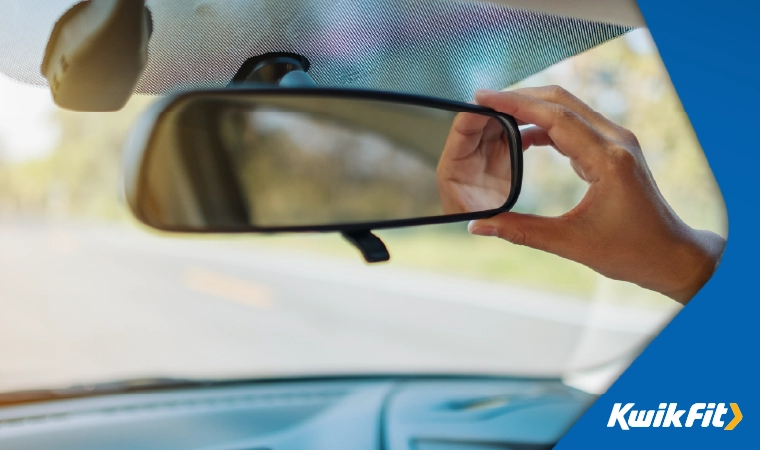
Adjust the rear-view mirror
You may find that simply adjusting your rear-view mirror helps reduce the glare from motorists approaching your car from behind.
Go for a vehicle with in-built rear-view mirror technology
If you’re looking for a new car, you might find it useful to go for a model with inbuilt rear view mirror technology, which has the ability to dim the mirror automatically. Alternatively, you could opt for a vehicle with darkened ‘sunset glass’ to help reduce the glare from bright headlights.
Find out more in our dedicated blog, ‘Be Glare Aware: How to Handle Dazzling Headlights’.
What can I do if my headlights are too bright?
You might not realise it, but the headlights on your vehicle may be too bright and cause issues for other road users. As the driver, it can be difficult to tell if you’re contributing to the problem, but there are a few things you can do to alter your lights to ensure you’re not dazzling fellow motorists:
- It’s worth checking if your vehicle automatically levels its headlights based on the weight of the load you’re carrying.
- If they don’t adjust automatically, you could try manually changing them in line with the instructions found in your car’s manual. So, if you’re driving by yourself with a completely empty boot, your headlight settings will need to be different compared to when you’re driving with other people in the car and a boot full of heavy luggage.
- You may also want to have the angle of your headlights looked at when you take your vehicle for its next service. The technician should be able to inspect your headlights and make sure the beam is positioned in the correct direction.
If you’re concerned about your vehicle’s headlights, Kwik Fit can help. Simply bring your car in for a service at your local centre and our team of experts will be able to carry out a thorough assessment.


Any facts, figures and prices shown in our blog articles are correct at time of publication.
Featured Articles
Is it Illegal to Drive With One Headlight?
Saturday 19th July 2025

Wondering if it’s illegal to drive with one headlight? Learn about the safety risks and penalties of illegal blown bulbs and why you should fix them promptly.
Air Con in EVs & Hybrids: Experts Answer Your Questions
Monday 30th June 2025

Does air con drain EV batteries? Can you use the air con while charging an electric car? Find out the answers to these questions & more from Kwik Fit’s experts.
Why Is Your Car Making a Noise? Fixes & Tips
Friday 13th June 2025

When your car starts making unexpected noises, it can certainly be quite disconcerting; it may be nothing to worry about, but here’s what you need to know.